EMBO Lab Leadership for Group Leaders
A leadership course for scientists who lead a research group. Find out more about the course and book for workshops taking place in 2026.
Why this course is for you
The EMBO Lab Leadership course for group leaders (or equivalent leadership role) is designed to teach you leadership skills and tools that are effective in research environments. You will work with your peers over three days of intensive training to explore your experience and leadership style, and apply new approaches directly to your leadership challenges.
-
Motivating people with different needs and expectations
-
Handling difficult conversations about performance and behaviour
-
Addressing conflict before it damages the team
-
Building a team that works effectively without relying on you for everything
-
Influencing peers and senior colleagues
In addition to the live training, you receive 12 months of access to our Training Hub to help you implement your new leadership approach over time, and bring your lab or team with you as you learn and grow.
Depending on your needs, you can choose to join us in person in Leimen, Germany, or take part in one of our engaging live online courses with peers from around the globe. Both courses provide identical skills, tools, and opportunities for discussion and reflection.
Course schedule
The workshop schedule varies for in-person and online participants:
- In-person (four days):
- Daily: 09:00 – 17:30
- Last day: 09:00 – 16:30
- Online (three days):
- Daily: 09:00 – 17:30 (CET/CEST)
The course is interactive and involves a lot of breakout group work and discussion, so requires full attendance and focus.
Both online and in person, we take regular breaks, including 15 minute coffee breaks around 10.30 and 15.30, and an hour for lunch around 12.30.
Physical course
Our in-person courses are designed to create a relaxed, engaging environment where you can step away from your day-to-day work and focus on learning with others.
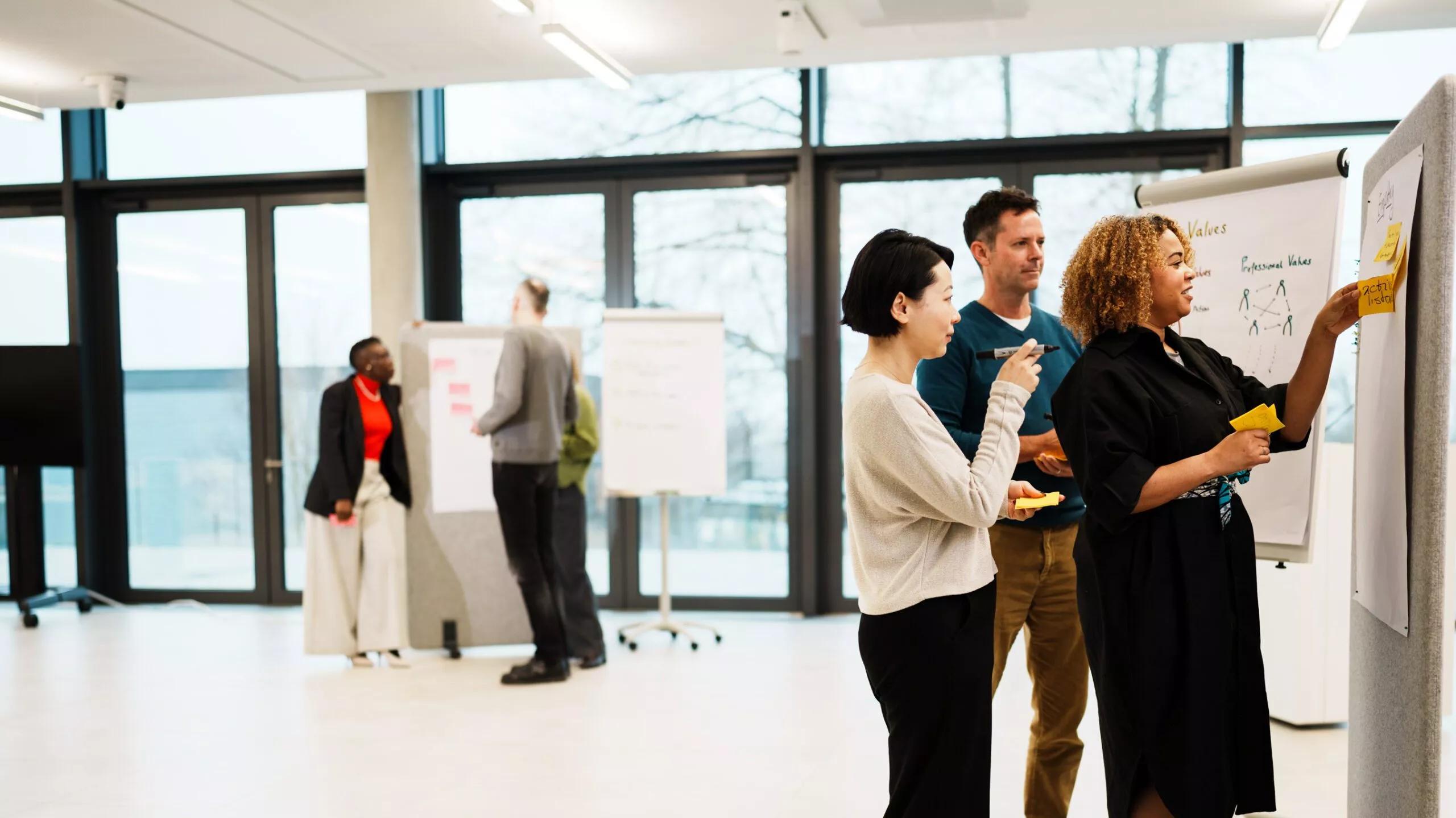
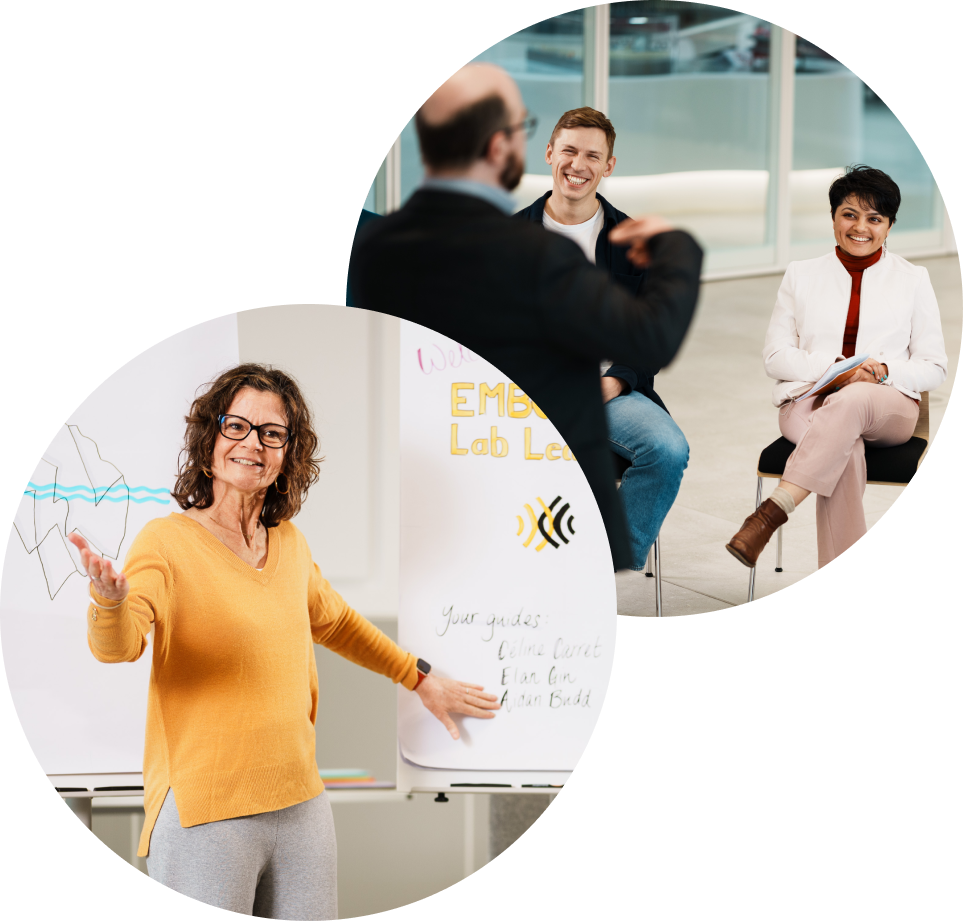
Sessions are highly interactive, with plenty of small-group discussion, practical exercises and opportunities to learn from the experiences of other participants. Our trainers make extensive use of flipcharts and live drawing rather than relying on slides, allowing ideas and models to develop visually as the discussion unfolds.
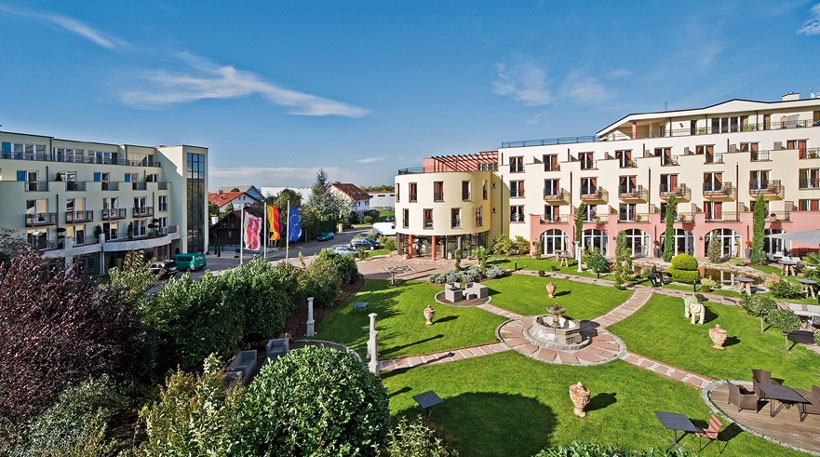
The course takes place at Hotel Villa Toskana near Heidelberg, Germany: a secluded, Italian-themed conference hotel designed specifically for workshops and meetings, with dedicated training spaces and plenty of room to continue conversations during breaks.
The hotel is around 15 minutes by tram from Heidelberg main station. You can read our guidance on travelling to the venue here, or see more photos of the venue here. Hotel image courtesy of Hotel Villa Toskana.
Live and interactive online
Our online courses are designed to be engaging, interactive and comfortable to participate in.
Rather than simply transferring a classroom course to a screen, we have designed the experience specifically for online learning. You’ll spend plenty of time discussing ideas and working with others in small groups, with regular breaks to help you stay focused and comfortable throughout the day.
Theory is brought to life through carefully designed visual presentations and live drawing on a tablet, helping to make complex ideas clear, memorable and engaging. Our trainers create a relaxed and supportive environment where you can ask questions, contribute to discussions and learn from the experiences of other participants.

You will learn (In Person)
Each course dynamically adapts its schedule to the needs and priorities of the participants. In principle, though: On the first day, we spend some time getting to know one another and building a level of awareness and trust. The course thrives on your contributions and insights, so we want you to feel welcome to share your experience and knowledge.
We spend time thinking about what it means to be a leader and how your values, experiences, and emotions impact the way you approach leadership. We look at how teams work effectively together and what sort of support they need from you, both as a collective
and as individuals within the research space.
We look at how you manage your time and attention across the many roles you play as a leader in research; from bottle-washer or debugger to visionary and everything in between.
Finally, we spend some time reflecting on the values that drive our perspectives and behaviour and explore how values can help diverse groups of people understand each other more deeply and find effective ways to share resources and work together.
Topics Covered
Leadership & Management | Role development | Team development | Values
On the second day, we will spend time reflecting on how we are influenced by our emotions, and what impact this has on our effectiveness as leaders.
We will also explore one perspective on the rich variety of personalities in the world and how each person’s focus, habits, needs, and motivations leads them to understand and interact with the world.
In the afternoon, we will look at a communication tool that helps us understand the impact of our emotions on our communication, as well as the way that other people’s behaviour and language causes us to respond,
We will finish the day by discussing the importance of clarity and empathy when delivering feedback to ensure that it is effective and will lead to development and change.
Topics Covered
Emotional Intelligence & Personality | Communication | Feedback
On the third day, we spent time understanding the nature of conflict and looking at communication and other tools that can help us to identify and resolve conflict.
We will explore motivation and what different people need to feel motivated. We will share a diagnostic tool to support you in trouble-shooting low levels of motivation.
We will look at the importance of empowering your people to find their own solutions and develop their own strategies and how to support people in an adaptive way to ensure that when you assign work to them, they are set up for success.
We will finish with a tool that supports us to align our attitude with our strategic goals and prepares us for difficult situations.
Topics Covered
Conflict management | Motivation | Coaching | Attitudinal goals
On the fourth day we will begin by exploring the environment in which we work and the impact of other people’s expectations, emotions, and needs on our work together.
We will then explore how to approach hiring people in a way that allows us to collect unbiased data and make good decisions.
We will share a tool for supporting the people you are leading to help them take on work effectively; delegating to them in a way that is aware of their level of development and motivation.
Finally, we will reflect on how to move forward with the work we have done over the past days, and how to empower our people to take risks, be honest, innovate, and develop themselves as scientists.
Topics Covered
Working environment | Hiring & interviewing | Delegation | Empowering others
You will learn (online)
Each course dynamically adapts its schedule to the needs and priorities of the participants. In principle, though: On the first day, we spend some time getting to know one another and building a level of awareness and trust. The course thrives on your contributions and insights, so we want you to feel welcome to share your experience and knowledge.
We spend time thinking about what it means to be a leader and how your values, experiences, and emotions impact the way you approach leadership. We look at how teams work effectively together and what sort of support they need from you, both as a collective and as individuals within the research space.
We look at how you manage your time and attention across the many roles you play as a leader in research; from bottle-washer or debugger to visionary and everything in between.
Finally, we spend some time reflecting on the values that drive our perspectives and behaviour and explore how values can help diverse groups of people understand each other more deeply and find effective ways to share resources and work together.
Topics Covered
Leadership & Management | Role development | Team development | Values
On the second day, we will spend time reflecting on how we are influenced by our emotions, and what impact this has on our effectiveness as leaders.
We will explore a model of communication that looks at how and why people communicate in certain ways, and what impact our own communication style has on the willingness of others to work hard, be honest, develop themselves, and take ownership of their work.
In the afternoon, we will look at the importance of clarity and empathy when delivering feedback to ensure that it is effective and will lead to development and change.
We will finish the day by looking at motivation and what different people need to feel motivated. We will share a diagnostic tool to support you in trouble-shooting low levels of motivation.
Topics Covered
Emotional Intelligence & Personality | Communication | Feedback | Motivation
On the third day, we spent time understanding the nature of conflict and looking at communication and other tools that can help us to identify and resolve conflict.
We will explore the environment in which we work and the impact of other people’s expectations, emotions, and needs on our work together.
We will share a tool for supporting the people you are leading to help them take on work effectively; delegating to them in a way that is aware of their level of development and motivation.
And finally we will look at supporting people in an adaptive way to ensure that when you assign work to them, they are set up for success.
Topics Covered
Conflict management | Working environment | Delegation | Empowering others

After taking this course, I am well equipped to lead my research team. I am a better supervisor, capable of delegating tasks, solving conflicts, and managing my employees.
Anna Starnawska | Assistant Professor
Aarhus University

This course provided leadership exercises directly applicable to my daily work. The in-person meetings facilitated valuable peer exchanges, making it a memorable experience.
Nicolas Huguenin | Group Leader
ETH Zürich

The course has been a game changer in my leadership journey! Empowering me with crucial aspects like team management and conflict resolution.
Isis N. O. Souza | Assistant Professor
University of Rio de Janeiro
EMBO Lab Leadership for Group Leaders
In Person
Focus on your leadership skills away from the lab
What's included
- 4 full days of training
- 4 nights of accommodation
- Breakfast, lunch and dinner
- Course materials
- 12 months Training Hub access
Live Online
Explore your leadership in a dynamic digital setting
What's included
- 3 full days of training
- Live, interactive course
- Course materials
- 12 months Training Hub access
Dates & Locations

Our Training Team – Specialised for Scientists
Our trainers come from many different backgrounds, and all have been working directly and extensively with leaders in the life sciences for many years. Our team includes scientists, organisational development experts, human resources professionals, MBA graduates, mathematicians, professional coaches, and others with significant and relevant experience to supporting leaders in the life sciences.
For each course, we provide two trainers to balance their expertise and diversity to ensure that you receive the widest range of expertise, experience and insight possible from your training team.
EMBO Lab Leadership at your Institute
If you have a group of leaders that you would like to train together – maximising the benefit of the course by creating supportive, professional relationships between them in addition to building their leadership skills – then we’re happy to come to you! Find out how…