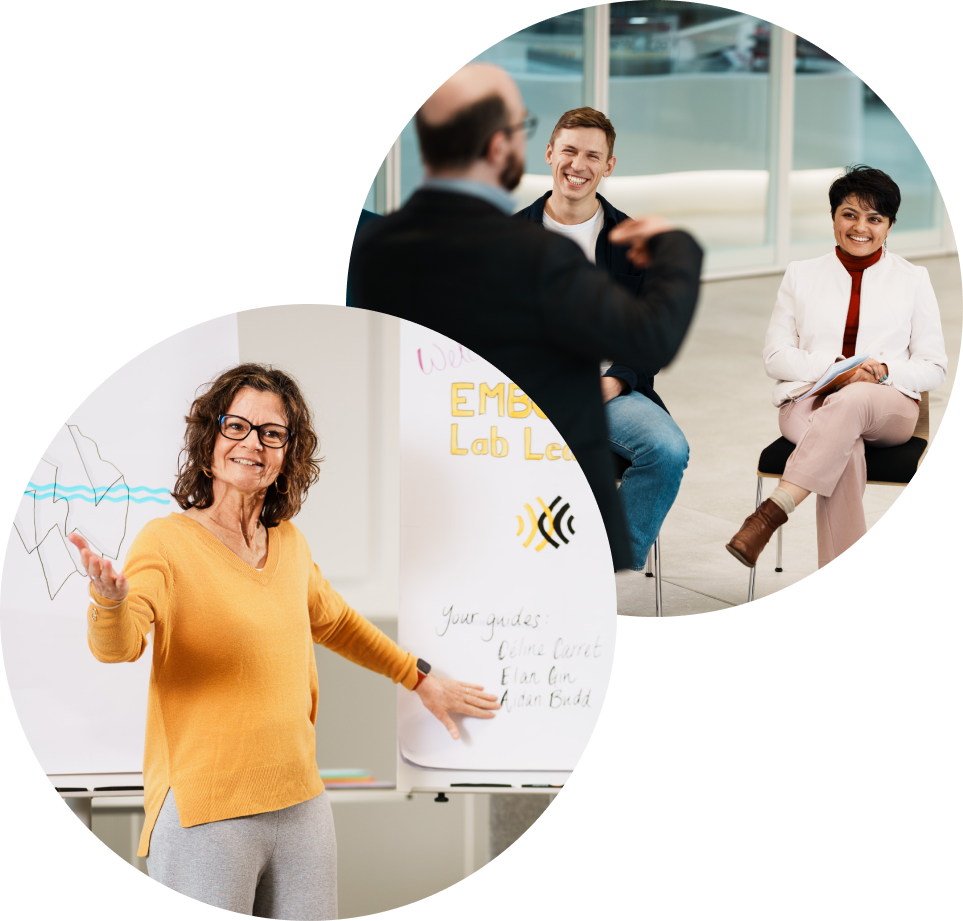
EMBO Lab Leadership for EMBO Young Investigators
A leadership course for scientists who lead a research group. This page is for the course delivered for the EMBO Young Investigator Network running 1–3 June 2027.
Why this course is for you
You will find the registration link for this course in the email from the YIN office.
The EMBO Lab Leadership course for group leaders is designed to teach you leadership skills and tools that are effective in research environments. You will work with other members of the EMBO YIN over three days of intensive training to explore your experience and leadership style, and apply new approaches directly to your leadership challenges.
-
Motivating people with different needs and expectations
-
Handling difficult conversations about performance and behaviour
-
Addressing conflict before it damages the team
-
Building a team that works effectively without relying on you for everything
-
Influencing peers and senior colleagues
In addition to the live training, you receive 12 months of access to our Training Hub to help you implement your new leadership approach over time, and bring your lab or team with you as you learn and grow.
Course schedule
The course dates are: 1–3 June 2027.
The course takes place over 3 days from 09.00 to 17.30 each day. On the last day we aim to finish by 16.30 if we can to support onward travel.
The course is interactive and involves a lot of breakout group work and discussion, so requires full attendance and focus. Please reschedule any online meetings or other work you may have to support your attendance of the course.
If you attend the course, a hotel room will be booked for you, checking in on the 31st May (the night before the course starts) and checking out on the last day of the course. Dinner is not provided on the day of arrival.
During the course, to keep us comfortable and provide opportunities for less formal interactions, we take regular breaks each day, including 15 minute coffee breaks around 10.30 and 15.30, and an hour for lunch around 12.30. Dinner is provided on the first two full days of the course.

Physical course
Our in-person courses are designed to create a relaxed, engaging environment where you can step away from your day-to-day work and focus on learning with others.
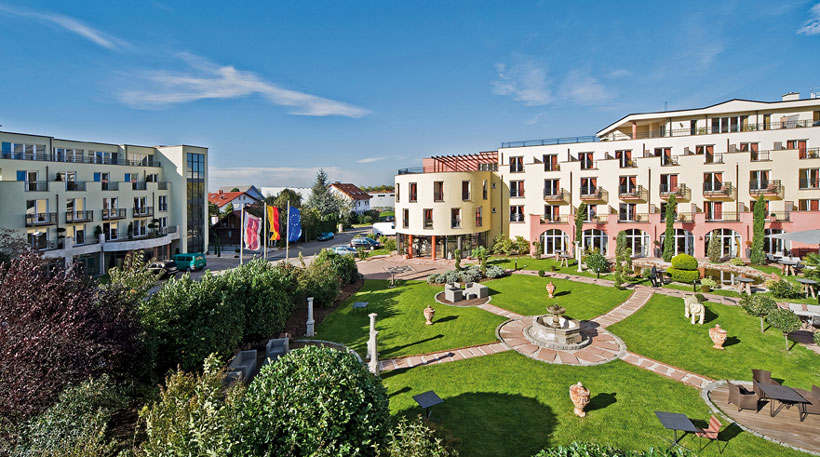
Sessions are highly interactive, with plenty of small-group discussion, practical exercises and opportunities to learn from the experiences of other participants. Our trainers make extensive use of flipcharts and live drawing rather than relying on slides, allowing ideas and models to develop visually as the discussion unfolds.
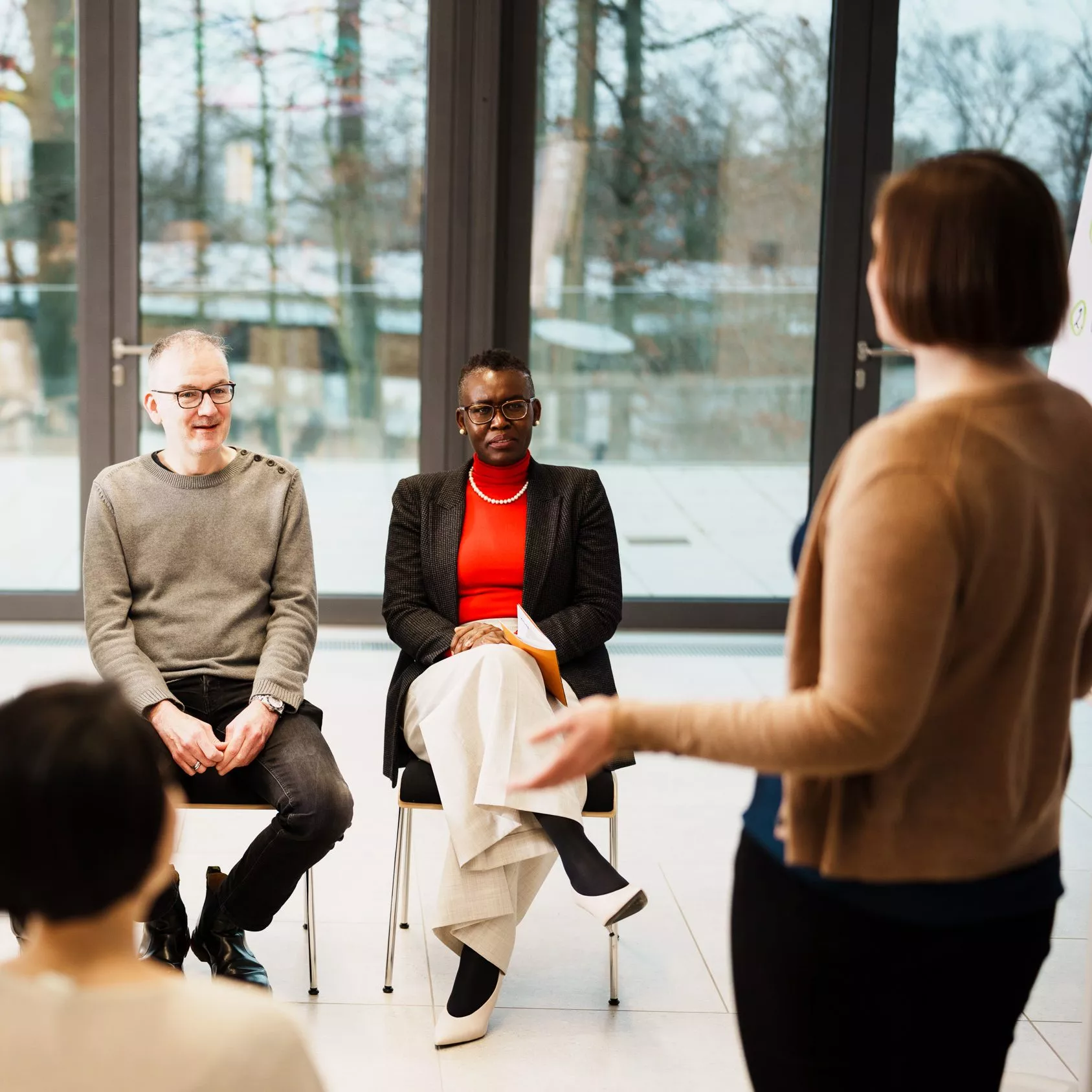
The course takes place at Hotel Villa Toskana near Heidelberg, Germany: a secluded, Italian-themed conference hotel designed specifically for workshops and meetings, with dedicated training spaces and plenty of room to continue conversations during breaks.
The hotel is around 15 minutes by tram from Heidelberg main station. You can read our guidance on travelling to the venue here, or see more photos of the venue here. Hotel image courtesy of Hotel Villa Toskana.
You will learn
On the first day, we spend some time getting to know one another and building a level of awareness and trust. The course thrives on your contributions and insights, so we want you to feel welcome to share your experience and knowledge.
We explore what it means to be a leader and how your values, experiences, and emotions impact the way you approach leadership. We look at how teams work effectively together and what sort of support they need from you as the leader at different stages of development.
In the afternoon, we review how you manage your time and attention across the many roles you play as a leader in research; from visionary to bottle-washer and everything in between.
Finally, we spend time reflecting on the values that drive our perspectives and behaviour and explore how values can help diverse groups of people understand each other more deeply and find effective ways to share resources and work together.
Topics Covered
Leadership & Management | Role development | Team development | Values
On the second day, we analyse how we are influenced by our emotions, and what impact this has on our effectiveness as colleagues and leaders.
We will explore the nature and impact of conflict and look at communication and other tools that can help us to identify and resolve conflict.
In the afternoon, we assess a model of communication that looks at how and why people communicate in certain ways, and what impact our own style has on the ability of others to listen, be honest, and take ownership of their work.
We then apply this theory to understand the importance of clarity and empathy when delivering feedback to ensure that it is effective and will lead to development and change.
Topics Covered
Emotional Intelligence | Conflict | Communication | Feedback
On the third day, we explore how to develop a positive lab culture that supports every member of the team to create a space in which people can admit mistakes, grow from feedback, support others with their challenges, and do their best work.
We will explore how a coaching approach – supporting others to find their own solutions – can empower your people to build self-confidence, develop their problem-solving skills, and create their own plans to do their best work.
We investigate areas of work and the work environment that influence motivation and what different people need to feel motivated. We share a diagnostic tool to support you in trouble-shooting low levels of motivation.
Finally, we share a tool for supporting the people you are leading to help them take on work effectively; delegating to them, or supporting them with their own tasks in a way that is tailored to their level of development and motivation.
Topics Covered
Lab Culture | Coaching | Motivation | Delegation

After taking this course, I am well equipped to lead my research team. I am a better supervisor, capable of delegating tasks, solving conflicts, and managing my employees.
Anna Starnawska | Assistant Professor
Aarhus University

This course provided leadership exercises directly applicable to my daily work. The in-person meetings facilitated valuable peer exchanges, making it a memorable experience.
Nicolas Huguenin | Group Leader
ETH Zürich

The course has been a game changer in my leadership journey! Empowering me with crucial aspects like team management and conflict resolution.
Isis N. O. Souza | Assistant Professor
University of Rio de Janeiro

Our Training Team – Specialised for Scientists
Our trainers come from many different backgrounds, and all have been working directly and extensively with leaders in the life sciences for many years. Our team includes scientists, organisational development experts, human resources professionals, MBA graduates, mathematicians, professional coaches, and others with significant and relevant experience to supporting leaders in the life sciences.
For each course, we provide two trainers to balance their expertise and diversity to ensure that you receive the widest range of expertise, experience and insight possible from your training team.